





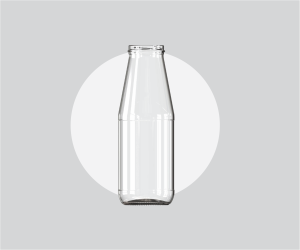


The question “how do I find a jam jar” is not just about buying a glass container. For a producer, a small delicatessen unit or an organized food brand, the right jar affects the preservation of the product, the speed of production, the consumer experience and ultimately its commercial position on the shelf.
Jam is a product with intense color, aroma, texture and often high added value. The packaging must protect these characteristics, without making it difficult to fill, close or use at home and in the professional kitchen. That is why the choice does not start from “which jar is beautiful”, but from how it is produced, where it is distributed and to whom the jam is addressed.
How do I find a jam jar with the right specifications?
The first technical decision is capacity. 200 to 250 ml is a common choice for retail products, as it offers a sufficient quantity for daily consumption and leaves room for competitive pricing. Smaller jars, such as 30, 50 or 110 ml, serve hotel units, sampling, gift boxes and premium ranges with special raw materials. Larger capacities can be efficient for horeca or family consumption, but they increase weight, require more careful label design and do not suit every sales channel.
The first technical decision is capacity. 200 to 250 ml is a common choice for retail products, as it offers a sufficient quantity for daily consumption and leaves room for competitive pricing. Smaller jars, such as 30, 50 or 110 ml, serve hotel units, sampling, gift boxes and premium ranges with special raw materials. Larger capacities can be efficient for catering or family consumption, but they increase weight, require more careful label design and do not suit every sales channel.
Equally critical is the spout. A wide spout facilitates flow during filling and allows the consumer to spoon out the jam comfortably. For jams with larger pieces of fruit, citrus peels, or a thicker texture, this option is usually more functional. Conversely, a narrower spout may accommodate specific designs or small packages, but must be evaluated in relation to the production line and usability.
The relationship between shape and commercial positioning
The cylindrical jar is timeless, easy to palletize and particularly practical for labels. A low, wider jar emphasizes the handmade, gastronomic identity and allows better access to the product. Square or hexagonal shapes create differentiation, but may require more attention to label application, crate placement and inventory management.
The most distinctive form is not always the best choice. If production is large and distribution is extensive, functional stability, availability and efficient transportation are often more valuable than a complex design. However, if the jam is aimed at premium grocery stores, tourist spots or corporate gifts, the container can act as an essential brand differentiator.
The glass protects the product and highlights its color.
For jam, glass offers neutral contact with the food and allows the consumer to see the true color, texture and pieces of fruit. This is especially important when the product is based on the quality of the raw material: strawberry with an intense hue, apricot with a natural haze, citrus fruits with visible peels or special fruit combinations.
At the same time, the choice of glass container should be considered based on filling temperatures and heat treatment. Many jams are filled hot to support product safety and shelf life. The container needs to be suitable for the specific process, while the temperature transition must be done in a controlled manner to limit the risk of thermal shock.
Transparency also has a practical disadvantage: the product is exposed to more light. For recipes with sensitive natural colors or when shelf exposure is intense, secondary packaging, point of sale and storage play a crucial role. The right choice of jar does not work in isolation from the rest of the packaging chain.
Weight, durability and transportation costs
A heavier jar often communicates quality and stability in the hand. However, it increases material consumption, transportation costs and overall pallet weight. A lighter jar can improve supply chain efficiency and reduce the environmental footprint, as long as it meets the mechanical requirements of filling, closing and handling.
The right balance depends on the destination. For local distribution of small batches, the emphasis may be on aesthetics and a sense of quality. For export or large distribution, durability, standardization and efficient palletizing take on greater importance. Sustainability is not only a matter of recyclable material, but also a matter of proper design throughout the packaging life cycle.
The cap is part of the solution, not a detail
The jar and the cap should be selected as a single system. Metal twist-off caps are widely used in jams, which offer reliable closure and ease of opening. The diameter of the cap should correspond exactly to the mouth, while the choice of the appropriate lining inside is crucial for food contact and pasteurization conditions.
The creation of a vacuum after filling is a key indicator of proper closure. It is not enough for the cap to screw on tightly. The performance of the line, the closing torque, the temperature of the product during application and the behavior of the system after cooling need to be confirmed. These tests protect both the quality of the jam and the reputation of the producer.
The appearance of the cap can also enhance the product’s identity. A color that is associated with the taste, a printed surface or a selected matte texture give the package coherence. However, aesthetics must follow function. An impressive cap without consistent closing performance is not a commercial solution.
From label to box: packaging as a system
The choice of jar determines the surface and geometry of the label. A cylindrical body facilitates label application at high speeds, while a jar with sharp corners or curves may require special mock-up design. The name, ingredients, nutritional declaration, net quantity, batch and best before date must be clearly legible, without losing the commercial purity of the design.
The shipping box, dividers and pallet deserve the same attention. Even a properly selected jar can suffer losses if it is not adequately supported during transport or if the pallet layout is not compatible with its dimensions. Testing the packaging in real traffic is much more reliable than a theoretical assessment in the office.
For businesses seeking a consistent presence across multiple categories, the jam jar can be part of a broader family of packaging for spreads, honey, chutneys or delicatessen products. The common language of shapes and closures enhances recognition and simplifies sourcing.
Supplier selection affects production safety
The right supply is not just about the jar code. It’s about consistent quality from batch to batch, technical support, inventory planning, and access to complementary solutions, from closures to decorative applications. For a producer, a delay or incompatibility can impact the entire bottling program.
Apikyan Packaging, with experience in glass packaging since 1991 and international commercial activity, approaches the container as part of the total value of the product. This means that the choice can be considered based on the actual needs of the production, brand positioning, distribution requirements and sustainability goals, not only on the basis of the unit price.
Before committing to a quantity, ask for samples, fill the finished product, check the closure, and place the jar next to your main competitors. This will show whether the packaging simply contains the jam or helps your product earn the position it deserves.